
Precision Borosilicate Microfibre Elements for H2 Generation, Storage, and Fuel Cells
Hydrogen is the backbone of the energy transition. At R+F FilterElements, we ensure this backbone remains strong by providing filtration solutions that guarantee the extreme purity levels required for fuel cells and high-pressure hydrogen systems. Our borosilicate technology is the key to reliable H2 processing.
The Role of Filtration in the Hydrogen Value Chain
Hydrogen is one of the most promising energy carriers for decarbonizing industry, transport, and power generation. However, its success depends on one critical factor: purity. Even trace contaminants—water vapor, oil mist, particulates, or electrolyte carry-over—can compromise fuel cell performance, corrode compressors, or poison catalysts.
R+F FilterElements specializes in high-performance filtration solutions designed specifically for the unique challenges of hydrogen processing. Our borosilicate microfibre elements deliver the deep-bed filtration, chemical resistance, and mechanical stability required across the entire H2 value chain.
Key Filtration Challenges in Hydrogen Systems:
• Electrolysis Protection: Removal of KOH or electrolyte mist from the gas stream in alkaline and PEM electrolyzers.
• High-Pressure Compression: Protecting compressors from particulate wear and removing oil carry-over in multi-stage compression systems.
• Fuel Cell Longevity: Ensuring ISO 14687-compliant purity (≥99.97%) to prevent catalyst poisoning in PEM fuel cell stacks.
• Refueling Station Safety: Final-stage filtration before dispensing to ensure contaminant-free hydrogen at the nozzle.
Without reliable filtration, even the most advanced hydrogen infrastructure is at risk of costly downtime, reduced efficiency, and premature component failure.
Technical Superiority of Borosilicate Microfibre for Hydrogen
Hydrogen molecules are among the smallest in industrial gas processing, and hydrogen systems operate under extreme conditions—high pressure, rapid cycling, and often corrosive environments. Standard filter media simply cannot meet these demands. That’s why R+F relies on borosilicate glass microfibre technology.
Why Borosilicate Microfibre is Ideal for H2 Filtration:
Deep-Bed Filtration with Minimal Pressure Drop
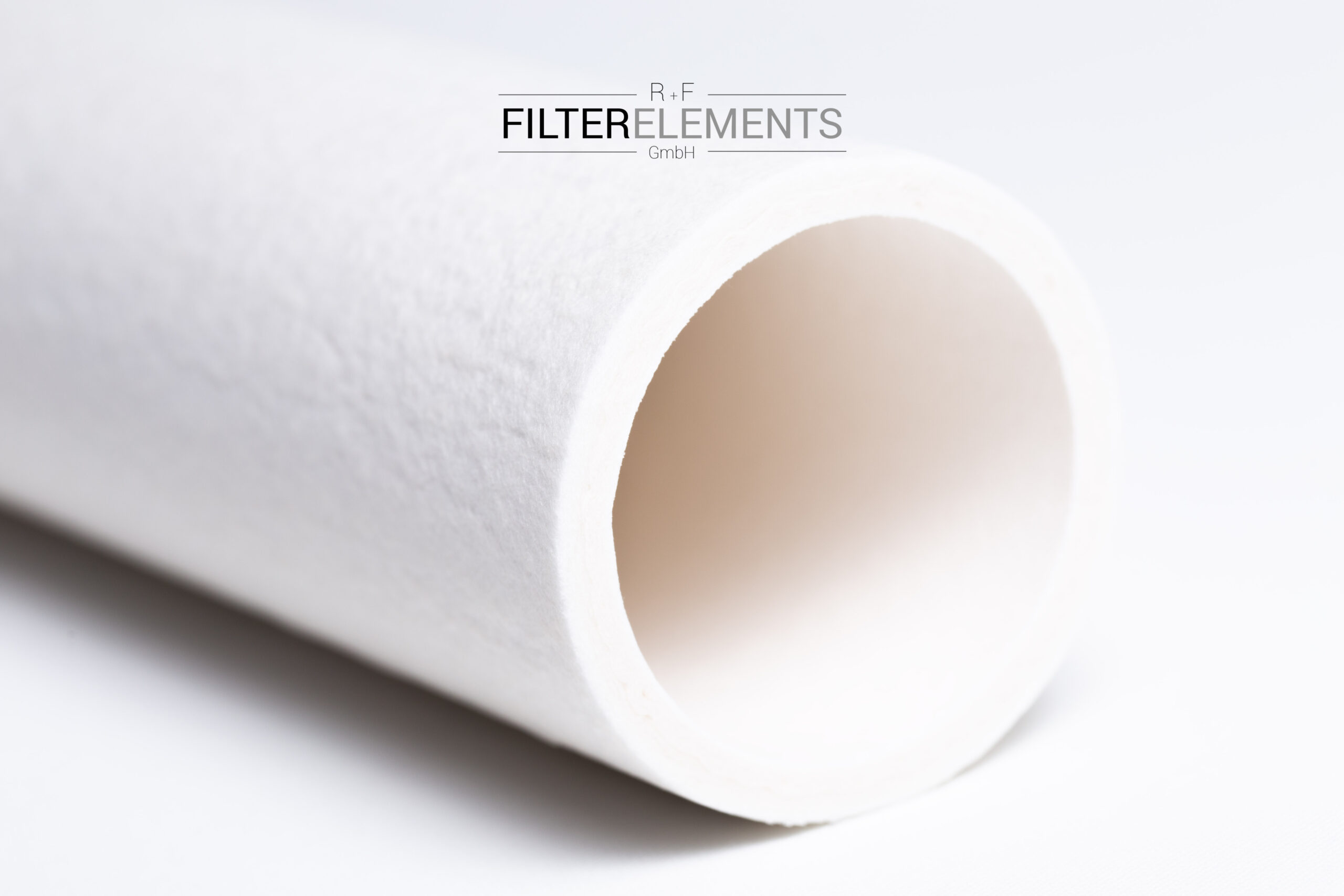
Our borosilicate media features a 90% void volume, allowing hydrogen to flow freely while capturing contaminants throughout the entire depth of the filter. This results in:
• Lower energy consumption in compression and circulation systems.
• Extended service life due to high dirt-holding capacity.
• Consistent performance even under fluctuating flow rates.
Chemical Resistance
Hydrogen production environments—especially alkaline electrolysis—expose filters to aggressive chemicals like potassium hydroxide (KOH). Borosilicate glass is naturally inert and resistant to both acidic and alkaline conditions, ensuring:
• No media degradation over time.
• No risk of fiber shedding or contamination of the gas stream.
• Compatibility with a wide range of process chemistries.
High-Pressure Stability
Hydrogen refueling stations and storage systems operate at pressures up to 700 bar (10,000 psi). Our filter elements are engineered with reinforced end caps and robust construction to withstand:
• Rapid pressure cycling during refueling events.
• Thermal expansion and contraction.
• Mechanical stress from high-velocity gas flow.
Coalescing Excellence
Water vapor and oil aerosols are common contaminants in compressed hydrogen. Our coalescing grades (UX, HE) efficiently remove liquid droplets down to 0.01 µm, ensuring:
• Dry hydrogen for fuel cells (dew point control).
• Protection of downstream equipment from corrosion.
• Compliance with ISO 14687 purity standards.
Temperature Tolerance
Standard grades operate reliably up to 150°C, while our high-temperature variants can handle up to 450°C—ideal for:
• Hot gas filtration in steam methane reforming (SMR).
• High-temperature electrolysis (SOEC).
• Thermal management in fuel cell systems.
Technical Specifications for Hydrogen Filtration Elements
R+F offers a comprehensive range of filter elements optimized for hydrogen applications. All elements are available in multiple efficiency grades, sizes, and materials to match your specific system requirements.
Efficiency Grades:
• UX (Ultra-High): 99.97% @ 0.01 µm – Ideal for fuel cell protection and ISO 14687 compliance.
• HE (High Efficiency): 95% @ 0.3 µm – Standard for post-electrolyzer and compression systems.
• ME (Medium Efficiency): 0.3 µm nominal – Bulk particulate removal in industrial H2 systems.
• ST (Standard): 5 µm nominal – Pre-filtration for compressors and storage.
Materials:
• Filter Media: Borosilicate glass microfibre with PVDF, Silicone, or Fluorocarbon binders.
• Housing Compatibility: Designed to fit all standard high-pressure stainless steel housings (316L, 304).
• Sealing: Fluorocarbon (Viton®) or EPDM O-rings for gas-tight seals.
Operating Conditions:
• Temperature Range: -40°C to +150°C (Standard) / up to +450°C (High-Temp variants).
• Pressure Rating: Up to 700 bar (10,000 psi) depending on housing design.
• Flow Rates: Scalable from laboratory systems (1 Nm³/h) to industrial plants (10,000+ Nm³/h).
Compliance:
• ISO 14687: Hydrogen fuel quality for fuel cell vehicles.
• ASME Section VIII: Pressure vessel standards for filter housings.
• CE / UKCA: Compliance for European and UK markets.
Applications Across the Hydrogen Ecosystem
R+F filtration solutions are deployed in every stage of the hydrogen value chain, from production to end use.
1. Green Hydrogen Production (Electrolysis)
Challenge: Electrolyzers generate hydrogen with trace amounts of water vapor, electrolyte mist (KOH, NaOH), and particulates from electrode wear.
Solution: Our coalescing and particulate elements remove these contaminants post-electrolyzer, ensuring clean H2 for compression and storage.
Typical Grades: HE (High Efficiency), UX (Ultra-High Efficiency)
2. Hydrogen Refueling Stations (HRS)
Challenge: Hydrogen must meet strict purity standards (ISO 14687) before dispensing to fuel cell vehicles. Contaminants from compression, storage, or transport must be removed.
Solution: Final-stage filtration with our 99.9999% efficiency elements ensures contaminant-free hydrogen at the nozzle.
Typical Grades: UX, AP (Activated Carbon for odor/vapor removal)
3. Industrial Hydrogen (Steel, Chemicals, Refining)
Challenge: Industrial processes require high-purity hydrogen for direct reduction of iron (DRI), hydrogenation reactions, and catalyst protection.
Solution: Our elements provide consistent purity control in high-flow, high-pressure environments.
Typical Grades: HE, ME (Medium Efficiency for bulk particulate removal)
4. Mobile Fuel Cells (Heavy-Duty Transport, Maritime)
Challenge: Fuel cell stacks in trucks, buses, and ships are sensitive to contaminants. Compact, reliable filtration is essential.
Solution: Our disposable in-line filters (DIF) and compact coalescing elements fit into space-constrained mobile systems.
Typical Grades: UX, HE (for maximum catalyst protection)
5. Hydrogen Storage & Distribution
Challenge: Long-term storage and pipeline transport can introduce rust, scale, and moisture into the hydrogen stream.
Solution: Pre-filtration with our particulate and coalescing elements protects compressors, valves, and end-use equipment.
Typical Grades: ME, ST (Standard particulate for bulk removal)
Engineering Your Hydrogen Future
The transition to a hydrogen economy demands filtration partners who understand the technology, the challenges, and the stakes. At R+F FilterElements, we don’t just supply filters—we engineer solutions.
Whether you’re designing a new electrolyzer plant, upgrading a refueling station, or protecting a fuel cell fleet, our team is ready to support you with:
• Custom element design for non-standard housings or flow rates.
• On-site filtration audits and system optimization.
• Rapid prototyping and testing for R&D projects.
• Technical documentation for regulatory compliance (ISO, ASME, CE).
Contact our hydrogen filtration specialists today to discuss your project.
DO YOU HAVE A SPECIAL REQUEST?
Let us improve your production process together. We have the know-how about a variety of raw materials and also applications to help you directly.
Send me a message and we will arrange a meeting together. Either online or on site.

Address
R+F FilterElements GmbH
Wollenweberstraße 25
31134 Hildesheim
Germany