
Optimizing Performance in Particulate and Gas Filtration
For a long time, UHMW-PE (Ultra-High-Molecular-Weight Polyethylene) filter elements were a go-to standard for basic filtration tasks. They are robust and inexpensive. However, as industrial requirements for air purity and energy efficiency increase, many technical engineers are switching to Borosilicate Microfiber filter elements.
If you are currently using porous plastic filters (PE), here is why upgrading to Borosilicate Microfiber is the smarter choice for your process.
The Technical Edge: Borosilicate vs. UHMW-PE
1. Superior Filtration Efficiency
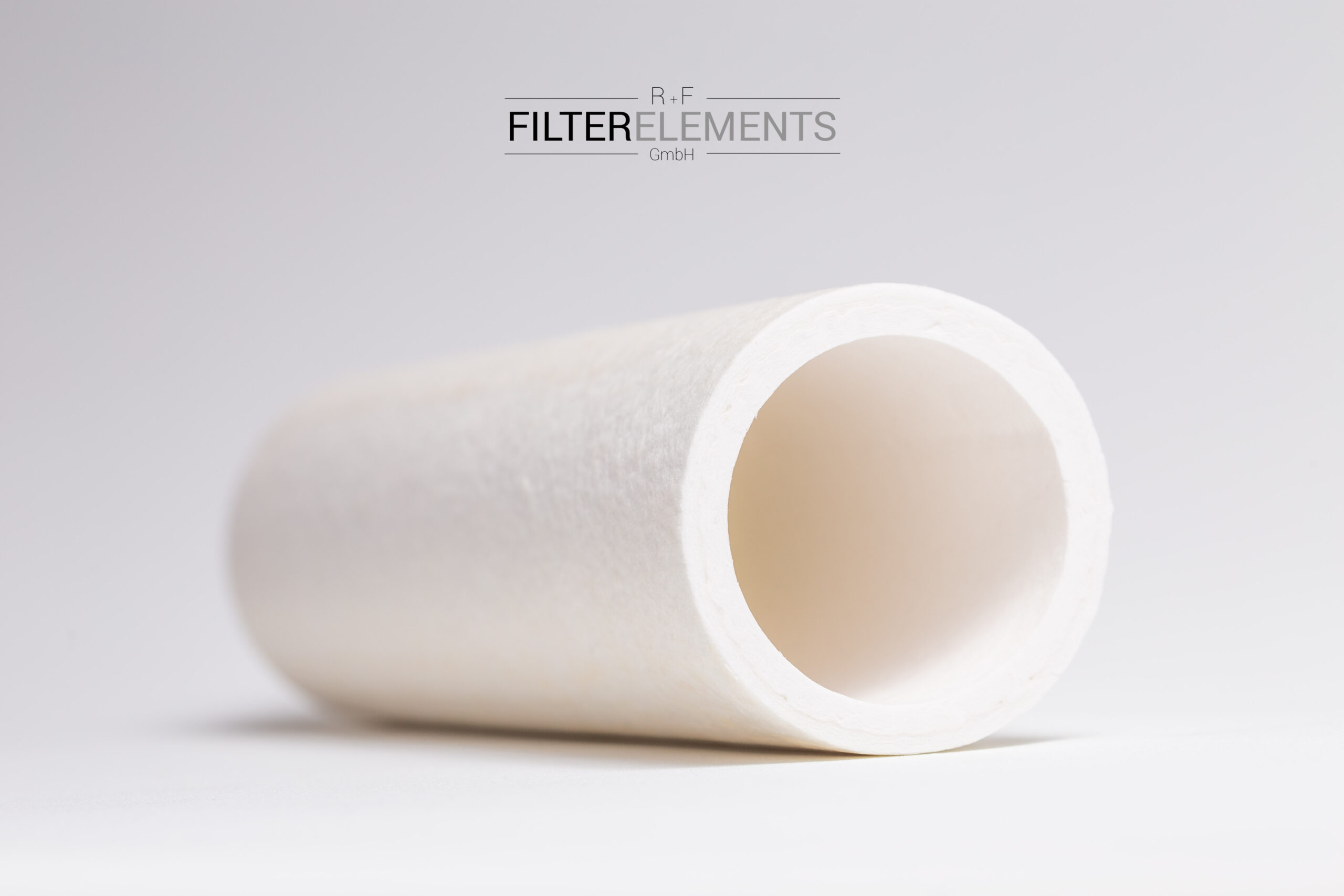
UHMW-PE filters are limited by their pore structure. Borosilicate microfibers, however, create a dense, high-void volume matrix. This allows for much higher retention rates, especially in the sub-micron range (0.1 to 1 micron), where PE filters often struggle.
2. Significantly Lower Pressure Drop
Energy costs are a major factor in compressed air and gas systems. Because Borosilicate Microfiber has a much higher “void volume” (more open space between fibers) than solid porous plastic, air flows through much more easily. This results in a lower differential pressure, saving you money on energy every single hour of operation.
3. Higher Dirt-Holding Capacity
While UHMW-PE filters can block quickly on the surface, Borosilicate Microfiber acts as a true depth filter. It captures contaminants throughout the entire thickness of the filter wall, leading to significantly longer service lives and fewer filter changes.
4. Temperature and Chemical Resistance
Borosilicate glass fibers are naturally more resistant to high temperatures and a wider range of chemicals compared to standard polyethylene, making them safer for critical industrial applications.
When Should You Make the Switch?
If your application involves fine particulate removal, sterile air filtration, or if you are simply looking to reduce your energy bill caused by high pressure drops, Borosilicate is the answer.
Our R+F Borosilicate elements are designed to be direct replacements for many standard UHMW-PE sizes, making the upgrade “plug-and-play.”
Find Your High-Efficiency Particulate Filter
Are you ready to improve your filtration quality? Explore our range of high-performance particulate filters and see how Borosilicate technology can transform your system.